

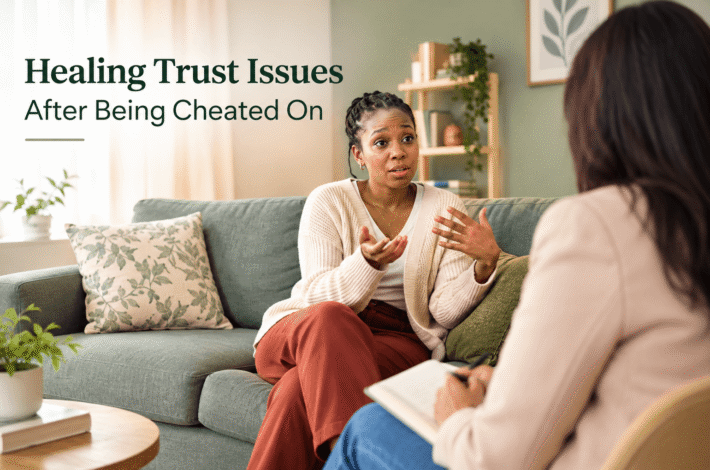
You may have forgiven them, or maybe you decided to stay together, but somehow, things still do not feel the same.
A late reply can make you anxious. A change in their tone can make you wonder what is really happening. Even when they have done nothing wrong, part of you may still be waiting for the next betrayal.
If you have been cheated on, this does not mean you are being dramatic or difficult. Betrayal can change the way you see love, relationships, and even your own judgment. Healing trust issues is not simply about deciding to trust someone again. It is about understanding what happened, rebuilding your sense of safety, and learning to trust yourself along the way.
Healing after being cheated on takes time. You don’t have to trust again before you feel ready
Why Cheating Can Affect Your Ability to Trust
Infidelity can create a deep emotional wound because it often breaks more than the relationship agreement. It can also damage your confidence in your own instincts.
You may start thinking about questions such as whether you missed warning signs, whether you were not enough, or whether you can trust your partner’s words again.
This can lead to trust issues after infidelity, where your mind constantly looks for signs that something is wrong. Checking their phone, overanalyzing messages, comparing yourself with another person, or repeatedly asking for reassurance may temporarily calm your anxiety. But these behaviours rarely create lasting security.
Real healing requires something deeper.
You need to understand what you are feeling, identify what you need from the relationship, and decide what healthy trust should look like for you now.
Healing After Being Cheated On Starts With You
One of the hardest parts of healing after being cheated on is accepting that you cannot control another person’s choices.
You cannot guarantee that someone will never hurt you again. What you can build is the confidence that you will listen to yourself, recognize unhealthy patterns, communicate your boundaries, and walk away if those boundaries are repeatedly ignored.
That shift can be incredibly important.
Instead of asking yourself whether your partner can be trusted every minute of every day, begin asking yourself whether you trust yourself to handle whatever happens next.
That is where healing begins.
Give Yourself Permission to Feel What You Feel
Anger, sadness, confusion, jealousy, fear, and even numbness can all appear during relationship healing after infidelity.
You do not have to rush through these emotions because someone else thinks you should have moved on.
At the same time, healing does not mean staying stuck in the pain forever. You can acknowledge what happened without allowing it to become the entire story of your life.
Writing down your thoughts, speaking honestly with someone you trust, and working with a life coach can help you process emotions instead of carrying them silently.
How to Rebuild Trust After Cheating
If you choose to continue the relationship, how to rebuild trust after cheating becomes an important question. Trust cannot be demanded. It has to be rebuilt through consistent actions over time.
Look for Consistency, Not Promises
An apology can be meaningful, but lasting change is usually shown through behaviour.
You may need openness, honesty, accountability, and consistency from your partner. If they say they want to repair the relationship, their everyday actions should support those words.
You also need space to communicate what makes you feel safe without turning the relationship into constant surveillance.
Set Clear Boundaries
Boundaries are not punishments. They are guidelines for what you are willing to accept in a relationship.
For example, you may need honesty around communication with other people, transparency about certain situations, or a clear understanding of what you consider unacceptable behaviour.
Healthy boundaries also include consequences. If a boundary is repeatedly ignored, you need to decide what action you will take to protect yourself.
Rebuild Trust Gradually
You do not have to wake up one morning and completely trust your partner again.
Think of trust as something rebuilt through many small experiences. Your partner communicates honestly. They follow through on what they say. You express a concern and are heard rather than dismissed. Over time, these experiences can create a new sense of reliability.
This is what rebuilding trust in a relationship often looks like in real life. It is gradual, sometimes uncomfortable, and rarely perfectly linear.
A Real-World Example
Imagine you discover that your partner has been having an emotional relationship with someone else.
You decide to stay and work on the relationship. A few weeks later, your partner takes longer than usual to respond to a message.
Your first reaction is panic. You immediately think, “It is happening again.”
Instead of accusing them or silently spiraling, you pause. You recognize that the fear is connected to what happened before, not necessarily what is happening right now.
You communicate honestly and say that the delayed response triggered some anxiety because of the betrayal.
Your partner responds openly and reassures you without dismissing your feelings.
One conversation does not erase the betrayal. But moments like this can slowly help you separate the past from the present.
That is part of how to trust again after cheating.
How to Move On After Being Cheated On
Moving on does not always mean ending the relationship.
Sometimes moving on means rebuilding a healthier relationship together. Sometimes it means accepting that the relationship cannot give you the safety and respect you need and choosing to leave.
Either way, how to move on after being cheated on starts with letting go of the idea that you have to find one perfect explanation for why someone betrayed you.
Their decision does not determine your worth.
You can also begin rebuilding parts of your identity that may have been pushed aside during the relationship. Spend time with people who make you feel like yourself. Return to interests you enjoy. Set personal goals. Create routines that make your life feel stable again.
The goal is not to become someone who never gets hurt.
The goal is to become someone who knows how to care for themselves when life hurts.
Where Life Coaching and Tarot Can Support Your Healing
Relationship coaching can give you a practical space to understand your emotions, identify patterns, clarify your boundaries, and make thoughtful decisions about what you want next.
With Life Coaching and Tarot, tarot can be used alongside coaching as a reflective tool. It does not have to predict whether your partner will cheat again or tell you exactly what decision you should make.
Instead, a tarot reading can help you slow down and reflect on questions you may be avoiding. What are you afraid of? What pattern keeps repeating? What do you need to acknowledge? What would moving forward look like for you?
Life coaching keeps the focus on your choices and actions, while tarot can offer another perspective for self-reflection.
Is This Just Superstition
It is completely reasonable to be skeptical about tarot.
You do not need to believe that cards can predict your future for them to be useful as a reflective exercise. The value can come from the conversations and questions they encourage you to consider.
Your decisions remain yours.
For deeper emotional work, life coaching provides the practical structure. Tarot can simply be one supporting tool that helps you look at your situation from a different angle.
You Can Learn to Trust Yourself Again
Healing from relationship betrayal takes time. Some days you may feel strong, and other days an old memory may bring the fear back.
That does not mean you are failing.
Whether you are trying to repair a relationship or learning how to move forward on your own, you deserve a process that does not pressure you to forget what happened.
Overcoming betrayal in a relationship is not about pretending the betrayal never happened. It is about understanding what it taught you, deciding what you will accept going forward, and rebuilding your relationship with yourself.
If you are struggling to cope with cheating in a relationship, you do not have to work through every thought alone.
At Ananya Moon, Manishaa offers a grounded space through life coaching, relationship guidance, and tarot-based reflection to help you gain clarity and move forward with greater self-awareness.
If you feel ready to understand your emotions, rebuild your confidence, and find a healthier direction, you can book a session with Ananya Moon and begin from where you are.


